


PROJECTS
FALL 2026 - SPRING 2027
MEET OUR
2026 - 2027
PROJECT PARTNERS

This academic year 2026-27 we are co-listing projects from two programs, Data Mine of the Rockies and AI Engine. In general students from both programs and all universities have the opportunity to rate their interest the projects on respective application form. Because of the funding streams, students from Purdue University as well as universities in Colorado and Texas will receive preference.
These projects we are offering push the frontiers of applied data science, artificial intelligence, machine learning, and advanced analytics, challenging students to tackle some of the most complex problems facing aerospace, defense, cybersecurity, and critical infrastructure today. Working alongside government agencies, national security organizations, and industry leaders, students develop solutions for real-time multi-sensor data fusion, GPS and cyber anomaly detection, satellite collision and reentry risk assessment, space domain awareness, resilient cyber defense for space systems, infrastructure degradation forecasting, autonomous labeling and benchmarking frameworks, large language model applications, and predictive decision-support systems. Through these mission-driven projects, students transform massive, heterogeneous data sources into actionable intelligence that enhances situational awareness, strengthens national security, improves operational decision making, and helps shape the next generation of AI-enabled technologies for space, cyber, and terrestrial environments.





Sixteenth Air Force (16AF): Real Time Data Fusion [SPRING 2027]
[REMOTE] Sixteenth Air Force (16AF): Real Time Data Fusion The Department of the Air Force boasts a wealth of expertise across multiple organizations, capable of designing, testing, and deploying cutting-edge sensor systems utilizing seismic, infrasound, material debris, and gaseous detection methods for on-site physical measurements and near-real-time analytic assessments. Building upon this strong foundation, a significant opportunity exists to enhance our capabilities further by developing an integrated analytical framework for real-time data fusion.
This innovative framework will harness the power of multi-sensor outputs, unlocking enhanced detection, identification, and characterization of terrestrial and atmospheric interference phenomena. By embracing this advancement, we will significantly improve timely situational awareness, strengthen reporting accuracy, and empower more informed operational decision-making, solidifying our strategic advantage.
Must be a U.S. citizen due to national security requirements.
Mentor Time: Tuesdays
11:30 A.M. - 12:20 P.M. (Mountain)
12:30 P.M. - 1:20 P.M. (Central)
1:30 P.M. - 2:20 P.M. (Eastern)
Lab Time: Thursdays
11:30 A.M. - 1:20 P.M. (Mountain)
12:30 P.M. - 2:20 P.M. (Central)
1:30 P.M. - 3:20 P.M. (Eastern)
The Aerospace Corporation: Orbital Rush Hour – Characterizing Autonomous Satellite Constellation Behavior
[REMOTE] Aerospace Corporation: Space Domain Awareness / Space Traffic Management The Aerospace Corporation seeks to protect space assets by tracking the manuvers of satelites in proliferated Low-Earth Orbot (pLEO). Many such satelites do not share or report their behavior, creating concerns of saftey.
Students will develop an algorithim to track and classify satelite manuvers, offering an oppurtunity to work with real world Machine Learning and AI frameworks in the space domain.
Must be a U.S. citizen due to national security requirements.
Mentor Time: Tuesdays
1:30 P.M. - 2:20 P.M. (Mountain)
2:30 P.M. - 3:20 P.M. (Central)
3:30 P.M. - 4:20 P.M. (Eastern)
Lab Time: Thursdays
1:30 P.M. - 3:20 P.M. (Mountain)
2:30 P.M. - 4:20 P.M. (Central)
3:30 P.M. - 5:20 P.M. (Eastern)

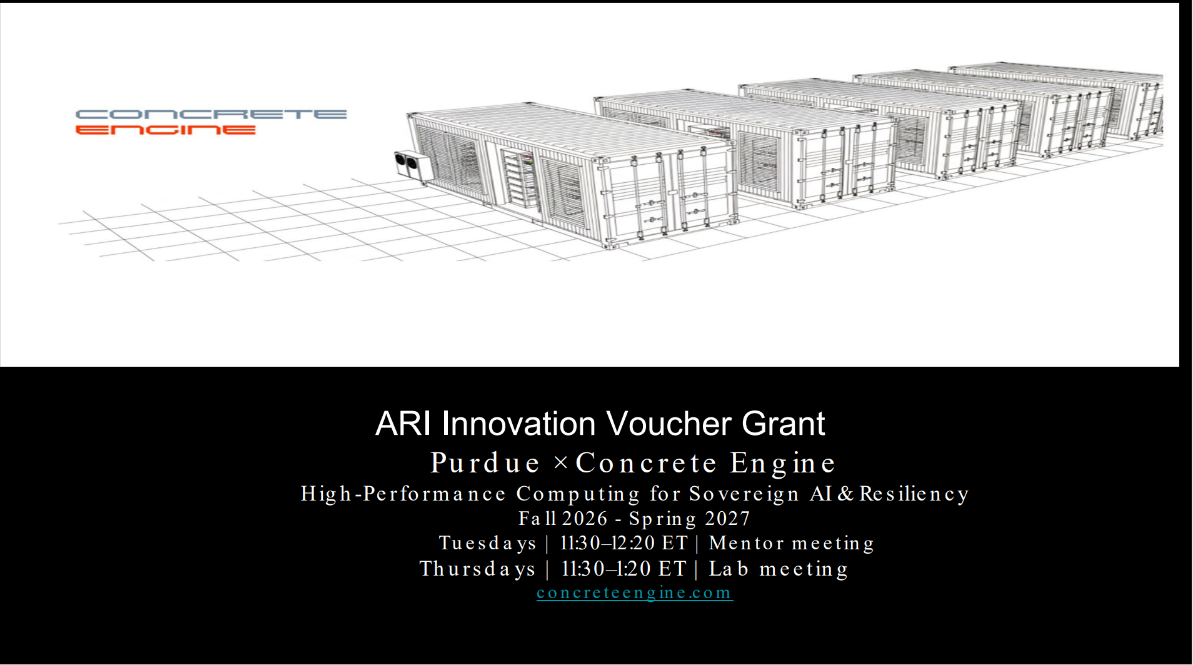
Concrete Engine: Performance Benchmarking for Modular Sovereign AI Computing Platforms
[REMOTE] Concrete Engine: Performance Benchmarking The world’s most important AI cannot always live in the cloud. Drug discovery, defense, and space research depend on sensitive data, protected intellectual property, and uninterrupted computation. That work needs infrastructure reseachers can trust.
Concrete engine builds compact, airgapped AI factories that keep data local while keeping research moving. Their systems are designed for university labs, distributed enviornments, and places where connectivity cannot be assumed. With Concrete engine, Data Mine of the Rockies students can work with real infrastructure, run real AI workflows, and help solve problems that matter.
This is your oppurtunity to help build the future of independent AI.
Open to all students.
Mentor Time: Tuesdays
9:30 A.M. - 10:20 A.M. (Mountain)
10:30 A.M. - 11:20 A.M. (Central)
11:30 A.M. - 12:20 P.M. (Eastern)
Lab Time: Thursdays
9:30 A.M. - 11:20 A.M. (Mountain)
10:30 A.M. - 12:20 P.M. (Central)
11:30 A.M. - 1:20 P.M. (Eastern)

Cummins: AI for Engineering Drawings
[WL] Cummins: AI for Engineering Drawings (IN PERSON - PURDUE WEST LAFAYETTE)
This AI Engine project with Cummins focuses on using artificial intelligence to improve how engineering drawings are interpreted, reviewed, and understood. Cummins is a global power solutions leader headquartered in Columbus, Indiana, with technologies and services that support engines, power systems, components, distribution, and zero-emissions solutions through Accelera by Cummins. The company’s broader mission is to make people’s lives better by powering a more prosperous world, while innovating for customers to power their success.
The project, AI for Engineering Drawings, explores how AI can help identify important regions within engineering drawings, including views, tables, notes, title blocks, dimensions, and revision blocks. This drawing-structure focus supports faster recognition of how drawings are organized and where key information is located. The project also examines engineering-content understanding, including how AI capabilities could answer questions, extract dimensions, flag potential issues, and compare revisions.
Students will evaluate model approaches, document what works, and recommend practical next steps for creating a scalable drawing-understanding workflow. The work combines supervised learning on labeled drawings with broader AI reasoning over drawing content. The goal is to support faster, more consistent review of engineering drawings while helping students gain applied experience with AI methods in a real industrial engineering context.
Open to all students
Applicants must be able to attend in person meetings at PURDUE WEST LAFAYETTE
Mentor Time: Tuesdays
11:30 A.M. - 12:20 P.M. (Mountain)
12:30 P.M. - 1:20 P.M. (Central)
1:30 P.M. - 2:20 P.M. (Eastern)
Lab Time: Thursdays
11:30 A.M. - 1:20 P.M. (Mountain)
12:30 P.M. - 2:20 P.M. (Central)
1:30 P.M. - 3:20 P.M. (Eastern)
Cummins PartPath: Intelligent Part Number & Supersession Discovery
[INDY] Cummins PartPath: Intelligent Part Number & Supersession Discovery (IN PERSON - PURDUE INDIANAPOLIS)
This AI Engine project with Cummins focuses on the creation of a centralized, intelligent search experience that lets users enter any known part number and immediately understand its complete lifecycle from original part, through every supersession, to the currently applicable part. Cummins is a global power solutions leader headquartered in Columbus, Indiana, with technologies and services that support engines, power systems, components, distribution, and zero-emissions solutions through Accelera by Cummins. The company’s broader mission is to make people’s lives better by powering a more prosperous world, while innovating for customers to power their success.
The project, AI for Engineering Drawings, seeks to deliver a product with the following characteristics:
Historical traceability: 1234 → 5678 → 7890
Backward & forward navigation: See predecessors and successors from any part
Supersession timeline: Understand what changed and when
Current status: Identify whether a part is active, obsolete, or superseded
Supporting context: Part descriptions, attributes, dates, reasons, and source records
Trusted search: Consolidates information across relevant Parts systems into a consistent view
Reduce time spent searching across systems and improve confidence in selecting the correct part by providing a single, intuitive view of the part’s full supersession history.
Applicants must be able to attend in person meetings at PURDUE INDIANAPOLIS

Mentor Time: Mondays
9:30 A.M. - 10:20 A.M. (Mountain)
10:30 A.M. - 11:20 A.M. (Central)
11:30 A.M. - 12:20 P.M. (Eastern)
Lab Time: Wednesdays
9:30 A.M. - 11:20 A.M. (Mountain)
10:30 A.M. - 12:20 A.M. (Central)
11:30 A.M. - 1:20 P.M. (Eastern)
NSIC: Project Shoelace: Detecting GPS Signal Disruptions [SPRING 2027]
[REMOTE] NSIC: Project Shoelace: Detecting GPS Signal Disruptions GPS signals are everywhere—from military operations to Uber rides—and disruptions can have serious, wide-ranging consequences. In this project, students will work alongside NSIC to improve machine learning algorithms that detect anomalies in the data supplied by the United States’ Global Positioning System (GPS), or more generally in readings from Global Navigation Satellite Systems (GNSS includes international peers of GPS). The student team will use large, complex, real-world, and publicly-accessible datasets. Students will refine and test models, explore global sensor networks, and help scale analytics that could eventually provide real-time warnings to GPS/GNSS users around the world. This is a chance to get hands-on with data science, AI, and national security while solving challenges that impact both defense and everyday life.
Must be a U.S. citizen due to national security requirements.
Mentor Time: Mondays
12:30 P.M - 1:20 P.M. (Mountain)
1:30 P.M - 2:20 P.M. (Central)
2:30 P.M - 3:20 P.M. (Eastern)
Lab Time: Wednesdays
11:30 A.M - 1:20 P.M.(Mountain)
12:30 P.M - 2:20 P.M. (Central)
1:30 P.M - 3:20 P.M. (Eastern)
Orion Labs: Traffic Behavior Analysis and Classification
[REMOTE] Orion Labs: Traffic Behavior Analysis and Classification Transportation agencies rely on data to make informed decisions on mitigation strategies to prevent collisions. Typically crash data has been the data that has been relied upon to enact these strategies. Unfortunately, relying on crash data means accidents have already happened. Transportation agencies are now taking a more proactive approach to prevent accidents in areas that are a high priority based on near miss or other traffic behavior data. Building off of Orion Lab’s previous project with Data Mine of The Rockies, Orion Labs’ seeks to enhance its spatio-temporal traffic data capture system.
Two primary systems are proposed for enhancement. The first is building off of the prior project to dive deeper into traffic analysis using the high fidelity data that Orion Labs’ captures. Traffic engineers can benefit greatly from the data that is captured by Orion Labs’ Saiph, but may not always have the skillset to manipulate the dense database. A suite of tools designed to intelligently query, filter, and present this data is desirable. Real traffic data and a software framework will be provided. This project focuses on designing queries, user interaction interfaces, and visualizations for supplied traffic analysis requests, such as “What is the average vehicle turning speed in this intersection?” or “How often do vehicles yield as required based on traffic signal phasing?”
Open to all students.
Mentor Time: Mondays
11:30 A.M. - 12:20 P.M. (Mountain)
12:30 P.M. - 1:20 P.M. (Central)
1:30 P.M. - 2:20 P.M. (Eastern)
Lab Time: Wednesdays
11:30 A.M. - 1:20 P.M. (Mountain)
12:30 P.M. - 2:20 P.M. (Central)
1:30 P.M. - 3:20 P.M. (Eastern)

Rolls-Royce: Aerospace Data Synthesizer Phase II
[INDY] Rolls-Royce: Aerospace Data Synthesizer Phase II (IN PERSON - PURDUE INDIANAPOLIS) This project addresses the need of the aerospace propulsion system Prognostics & Health Management (PHM) team to have access to synthetic data, which mimics the characteristics of actual fleet data, that the team can use to share with external research entities like universities to help explore and develop novel prognostic algorithms. Currently, the team lacks the ability to do meaningful exploration in this area with external partners due to export and International Traffic in Arms Regulations (ITAR) restriction on the data available, which restricts their ability to share data needed for such research.Phase 2 of the AI-based Synthetic Data Generator project builds on the foundation established by the Data Mine team and aims to enhance the tool with next-generation artificial intelligence and machine learning capabilities.
The goal is to update and optimize the Synthetic Data Generator so it operates within the Rolls-Royce (RR) IT ecosystem, using RR-approved libraries and infrastructure. A key part of this phase is to further develop the existing AI-driven functionalities by incorporating input and expertise from RR engineers, ensuring the tool is robust and ready for deployment in real aerospace engine programs. Students participating in this project will have the unique opportunity to contribute to and expand the platform, applying the latest AI methods to generate highly realistic synthetic fleet data that can be shared with universities and research partners, driving innovation in Prognostics & Health Management (PHM). This is an exciting chance for university students to develop practical, impactful AI solutions in collaboration with industry leaders—helping shape the future of aerospace technology through hands-on research and development.
Must be a U.S. citizen due to national security requirements.
Applicants must be able to attend in person meetings at PURDUE INDIANAPOLIS
Mentor Time: Mondays
9:30 A.M. - 10:20 A.M. (Mountain)
10:30 A.M. - 11:20 A.M. (Central)
11:30 A.M. - 12:20 P.M. (Eastern)
Lab Time: Wednesdays
9:30 A.M. - 11:20 A.M. (Mountain)
10:30 P.M. - 12:20 P.M. (Central)
11:30 A.M. - 1:20 P.M. (Eastern)
USSF Combat Forces Command (USSF/CFC): Safe Cyber Range
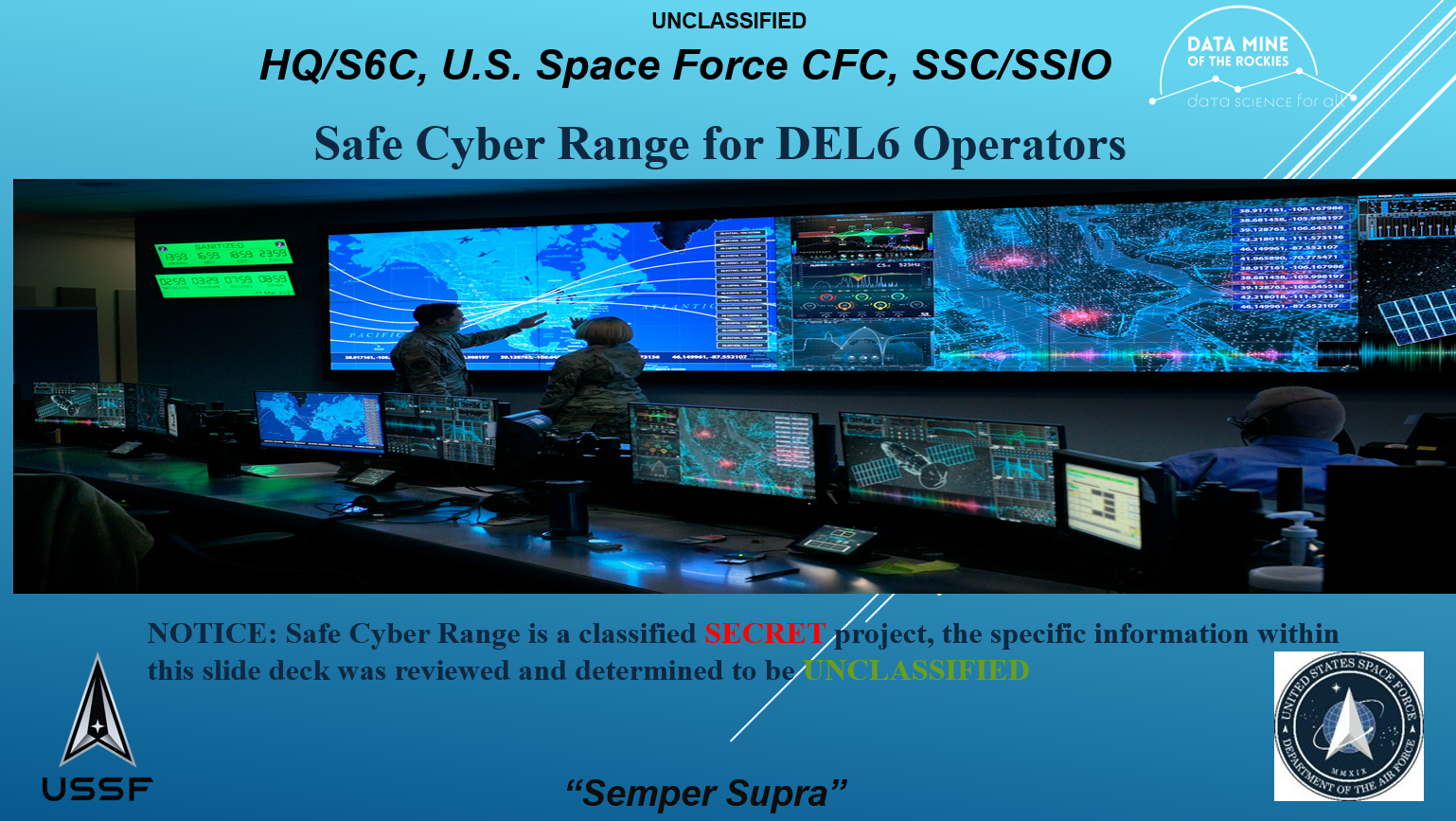
[REMOTE] USSF/CFC: Safe Cyber Range for DEL 6 Operators
DEL 6 cyber squadrons currently lack a low-risk, representative environment to conduct realistic "live-fire" training. This virtualized digital twin acts as a tactical sandbox, allowing operators to rehearse defensive maneuvers against automated adversary workflows without risking active operational networks.Rapid Playbook & Patch Validation: When new threat vectors emerge, DEL 6 can use the simulation's threat-injection engine to instantly test their defensive playbooks, measure mission-degradation effects, and validate security patches before pushing them to live weapon systems. Standardized Crew Benchmarking: The benchmarking and visualization layer provides DEL 6 commanders with objective readiness scorecards. It allows leadership to evaluate crew performance under identical, repeatable combat conditions to standardize mission qualification training.
Must be a U.S. citizen due to national security requirements.
Mentor Time: Tuesdays
1:30 P.M. - 2:20 P.M. (Mountain)
2:30 P.M. - 3:20 P.M. (Central)
3:30 P.M. - 4:20 P.M. (Eastern)
Lab Time: Thursdays
1:30 P.M. - 3:20 P.M. (Mountain)
2:30 P.M. - 4:20 P.M. (Central)
3:30 P.M. - 5:20 P.M. (Eastern)
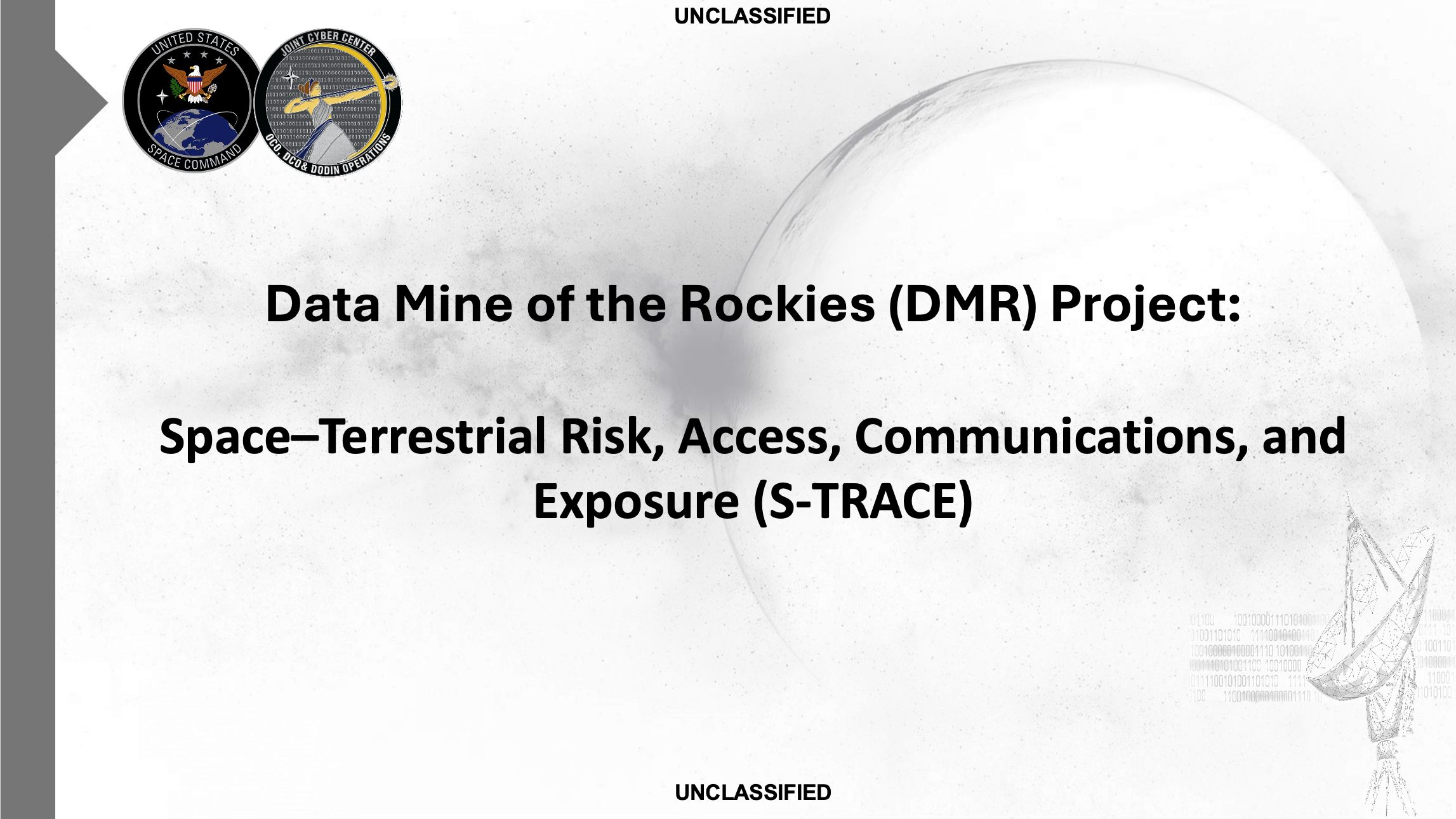
[REMOTE] USSPACECOM Joint Cyber Center (JCC): S-TRACE Modern space operations depend on complex connections between satellites, ground stations, and terrestrial networks and disruptions anywhere along that path can threaten mission success. In this project, students will work with U.S. Space Command’s Joint Cyber Center to help develop S-TRACE, a cyber situational awareness tool that integrates orbital visibility, space-to-ground communications modeling, and cyber threat intelligence. Students will analyze real-world data sources, map space–terrestrial communication paths, and correlate cyber vulnerabilities with mission-critical assets. The team will help scale analytics that improve resilience planning, reduce unexpected contact loss, and accelerate incident response. This is a hands-on opportunity to apply data science, cybersecurity, and space systems analysis to challenges central to national security and space mission assurance.
Must be a U.S. citizen due to national security requirements.
USSPACECOM Joint Cyber Center (JCC): S-TRACE
Mentor Time: Thursdays
1:30 P.M. - 2:20 P.M. (Mountain)
2:30 P.M. - 3:20 P.M. (Central)
3:30 P.M. - 4:20 P.M. (Eastern)
Lab Time: Tuesdays
1:30 P.M. - 3:20 P.M. (Mountain)
2:30 P.M. - 4:20 P.M. (Central)
3:30 P.M. - 5:20 P.M. (Eastern)
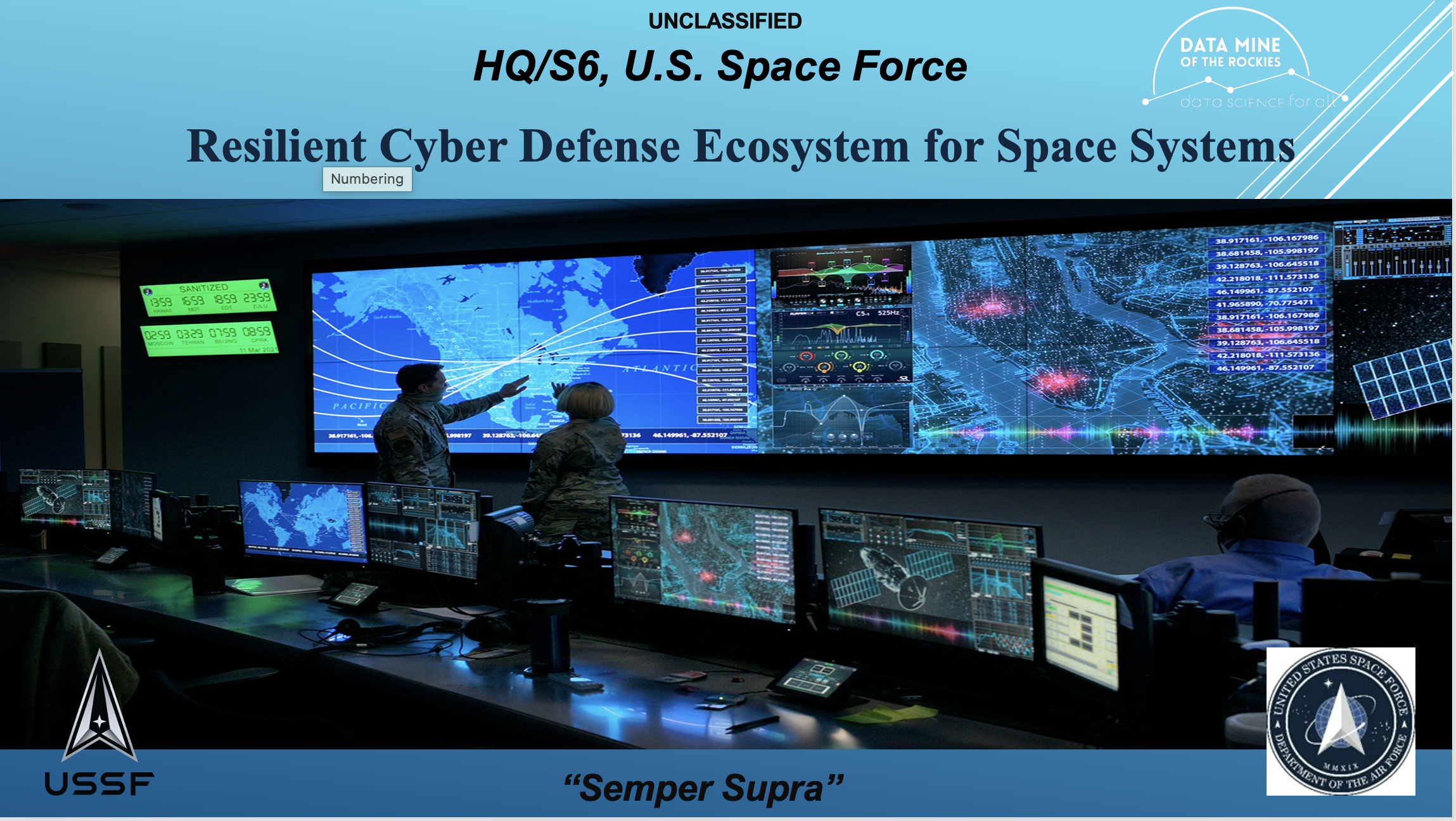
USSF HQ/S6: Resilient Cyber Defense Ecosystem for Space Systems [ON HOLD]
[REMOTE] USSF HQ/S6: Resilient Cyber Defense Ecosystem for Space Systems This effort will involve the design process and implementation of an integrated defensive ecosystem composed of three mutually reinforcing components that collectively support secure, resilient spacecraft operations:
1. Quantum-Resistant & Radiation-Aware Communication Layer
Implements PQC algorithms using open-source standards (ML-KEM for key exchange, ML-DSA for authentication, and AES for symmetric encryption).
Incorporates radiation-resilience features such as key-material integrity checks, periodic cryptographic self-tests, autonomous fallback/re-keying, and transient-fault recovery logic.
Employs a software-based radiation fault-injection framework—simulating single-event upsets, burst errors, and cumulative degradation—to evaluate and reinforce cryptographic robustness under space-relevant conditions.
Provides a firmware/software-centric design suitable for supporting legacy and future satellite communication architectures.
2. Autonomous Intrusion Detection & Prevention System (IDPS)
Deploys behavior-driven and signature-based detection using tools such as Suricata and Snort within a virtualized spacecraft environment.
Coordinates with the PQC layer to unify secure communication and cyber monitoring.
Distinguishes between malicious anomalies and radiation-induced effects using integrated telemetry and fault-injection event data.
3. Machine-Learning Data Analytics Engine
Performs real-time fusion and anomaly characterization on telemetry, network flows, and system-behavior data.
Utilizes public datasets (e.g., CICIDS2017, UNSW-NB15, UNR-IDD) alongside custom spacecraft-style logs generated from IDPS and radiation-fault events.
Enhances situational understanding by identifying early indicators of cyber intrusions, degraded crypto state, or radiation-driven disruption.
Must be a U.S. citizen due to national security requirements.
Mentor Time: Mondays
1:30 P.M. - 2:20 P.M. (Mountain)
2:30 P.M. - 3:20 P.M. (Central)
3:30 P.M. - 4:20 P.M. (Eastern)
Lab Time: Wednesdays
1:30 P.M. - 3:20 P.M. (Mountain)
2:30 P.M. - 4:20 P.M. (Central)
3:30 P.M. - 5:20 P.M. (Eastern)
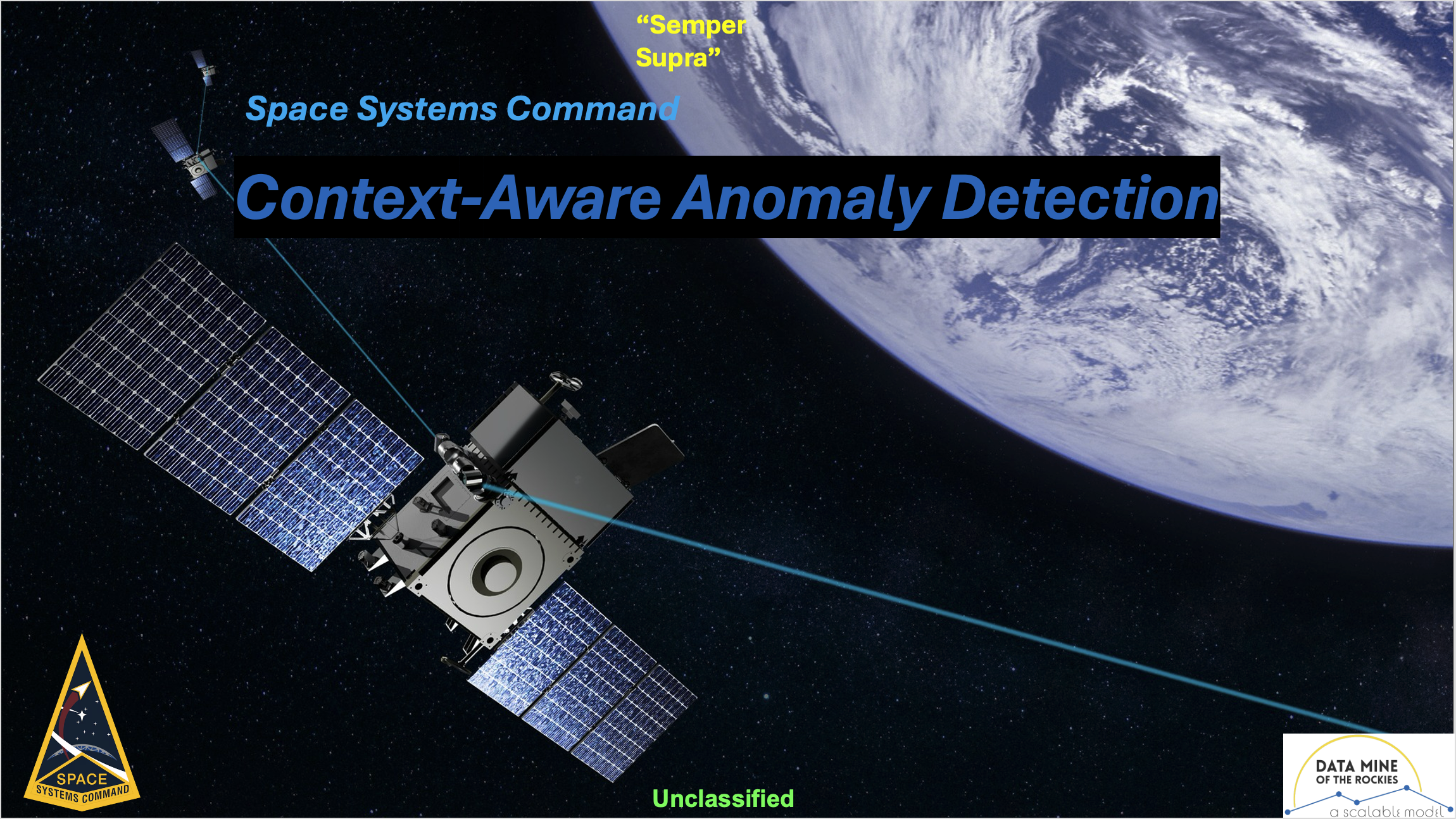
USSF SPACE SYSTEMS COMMAND (SSC): Context-Aware Anomaly Detection [ON HOLD]
[REMOTE] USSF SSC: Context-Aware Anomaly Detection Machine learning models have been widely adopted across many domains to support classification, prediction, and pattern-recognition tasks at scale. Within this landscape, data-fusion models play an increasingly important role by integrating information from multiple data sources to capture richer system dynamics than any single modality can provide.
These approaches—ranging from statistical fusion frameworks to modern graph-based and multi-modal deep learning architectures—enable more comprehensive situational understanding and improved model robustness. Building on these advances, this project aims to learn baseline patterns of activity across multiple types of data sources, such as logs, sensors, behavioral signals, and telemetry, and to explore graph-based fusion methods, multi-modal deep learning, and transfer-learning techniques to improve pattern recognition and reduce false alarms in complex systems.
Mentor Time: Mondays
11:30 A.M. - 12:20 P.M. (Mountain)
12:30 P.M. - 1:20 P.M. (Central)
1:30 P.M. - 2:20 P.M. (Eastern)
Lab Time: Fridays
11:30 A.M. - 1:20 P.M. (Mountain)
12:30 P.M. - 2:20 P.M. (Central)
1:30 P.M. - 3:20 P.M. (Eastern)